Clergy & Congregational Coach
laurastephensreed logo2 (1).png

Blog

Helping clergy and congregations navigate transitions with faithfulness and curiosity

My blog has moved to Substack! You can find new articles weekly there.

Visit my Substack

Use the button below to search the blog archives on this website.

Search the blog
Book recommendation: Faithful Families for Advent and Christmas

Advent and Christmas are hectic - for pastors and their families, for everyone. All of us want to experience the meaning of the season, not just rush from one activity or event to the next. And yet, it can be hard to know how.

Author and Presbyterian pastor (and all-around amazing human being) Traci Smith shows us the way in Faithful Families for Advent and Christmas: 100 Ways to Make the Season Sacred. In this more liturgically-focused riff on her book Faithful Families: Creating Sacred Moments at Home - which I also highly recommend - she offers accessible descriptions of the seasons and its themes and a range of prayers and activities that can be used with all ages. What I love most is that Traci designs these moments to take as little or as much time as you like and to be very low-stress and low-prep. She holds her offerings lightly, encouraging families to tailor them. And she gives the reader permission not to try all of the suggestions, modeling her advice to streamline the season overall.

Faithful Families for Advent and Christmas would be a handy guide for ministry leaders and caregivers in any year. The book is especially timely for 2020, when it seems certain that Advent and Christmas will look a lot different and much of its observance will be home-based. (There’s even a section on acknowledging big feelings during the holidays, which might come in very handy.) Traci gives permission for churches to use a certain number of selections in its communications, though if your congregation has the resources, the book as a whole would be a boon to families.

I will be using this book when the church calendar flips over. Some sections will be for our family of three. Others I will undertake on my own, because the simple beauty of the language and practices speaks to me in a time when everything seems so complicated.

Pastors, I don't just appreciate you, I admire you!

October is Pastor Appreciation Month. It’s probably a holiday made up to sell more greeting cards, but I’m going with it. You really you deserve gratitude year-round, though. That’s every year, and even more so in the flaming heap that is 2020. Here is what I’ve seen from you in the midst of pandemic, a civil rights movement, a grueling election cycle, and more:

Responsiveness. Not safe to gather at church? You took church virtual. Protests flare up over the murders of our siblings of color? You put on a mask and marched or donated to grassroots organizations that promote equity or led anti-racism studies in your congregations. People’s basic rights are at stake? You spoke hard truths, even when some called you “too political.” Social safety nets are crumbling? You made space in your churches for virtual learners or picked up food distribution to those in need.

Resilience. Many of you are working harder and longer than you ever have - and you were by no means slackers before - even though this work is largely invisible unless it doesn’t get done. You’ve realized much as a result about your gifts, your call, and your limits.

Innovation. You created new systems for worship, spiritual formation, pastoral care, and connection among church members. You’ve gleaned what is possible and what will be essential in a world where Covid-19 is more controlled.

Flexibility. Let’s face it. There has been, of necessity, a lot of trial and error over the past several months. Great! You’ve tried things, learned, and adapted or let go of what wasn’t working. That’s a healthy model for our congregations, many of which are hesitant to end any ministry, no matter how past its prime.

Love for your people. You’ve called. You’ve written. You’ve made porch visits. You’ve dropped off goodies. You have grieved not being able to see your congregation in person and to give hugs, handshakes, and fist bumps. You have been devastated when you couldn’t be with members as they were dying.

I am in awe of you.

And I want things for you:

Permission not to do all the things. Maybe this permission needs to come from your lay leaders or head of staff. Maybe it needs to come from within. Even though you are doing amazing ministry, you are not what you do. You are a beloved child of God, called and equipped for ministry and deserving of time and energy to care for the image of God within.

A sustainable rhythm. The pace you’ve been working at was borne of crisis. We have since realized that the emergencies of the past several months were not short-term. Covid will be with us for a while. The journey to justice is long. The US presidential election is likely to stir the pot more than cool it off. If you had known in March what was coming, how would you have approached it? How might you work with your leaders to shift into that gear now?

Recognition from your congregation. Some churches realize they are so fortunate to have their pastors. Others are beating their clergy to a bloody pulp out of their misplaced anxiety. I pray literally every night that your congregation takes as much care of you as you do of them.

Glimmers of normal. Maybe it’s a Bible study that meets outside, socially-distanced. Maybe it’s having a few people in the sanctuary when you preach. Maybe it’s getting a Covid test so that you can visit family or friends with a clear conscience. Whatever glimpse you need of the way things used to be in ministry and in life, I hope you find it.

People beyond your church to love and be loved by. These people might be sheltering at home with you. They might live far away, reachable now only by card, phone, or video call. Whatever the case, remember that there is life and care beyond the bounds of your work and that there are spaces where you can simply be a human, not a SuperPastor.

God, thank you for these pastors. Give them courage, creativity, support, and rest. We need them now more than ever. Amen.

[If this post resonated, you might want to check out Dear Pastors.]

It's Pastor Appreciation Month!.png
What the church could learn from the Cobra Kai showrunners

I was seven years old when Daniel LaRusso landed the crane kick on Johnny Lawrence that felled martial arts powerhouse (and bully factory) Cobra Kai in the All Valley Tournament. The Karate Kid was the ultimate underdog story. Scrawny new kid in town, tormented by the Cobra Kai clique and their sadistic sensei, gets taken underwing by a wise karate master and wins his way to an unlikely championship despite injury.

Though there were later movies in the franchise, none matched the entertainment value or emotional impact of the first iteration. I was thus amused when YouTube dipped a toe into original programming with the development of Cobra Kai, a kind of “where are they now?” tv series based on the characters. Several weeks ago the first two seasons moved over to Netflix, and I was no longer amused. I was 100% sucked in. It hit all the right notes for fans of the original movie. Interestingly, though, it did so in completely different ways than the film.

The church has been in the pangs of change for a while, now accelerated by Covid-19 and the creativity the virus has demanded. I think Cobra Kai speaks to the ways in which the church can be in the process of taking tradition into account while becoming something new.

Strike a balance between nostalgia and innovation. The backstory of Cobra Kai is familiar, as are much of the soundtrack and many of the pop culture references. But instead of going heavy on the drama, Cobra Kai leans into the humor of two adult men reliving their teen rivalry. For the church to become something new, it will have to decide what essentials it wants to carry forward and what note it wants to strike, then be willing to experiment with everything else.

Look for ways to reach multiple generations. One of the reasons Cobra Kai works is because it’s a multi-generational story. The Daniel-Johnny storyline speaks to Gen Xers, while the budding conflict among their children and students is relatable for younger audiences. Churches can no longer cater primarily to a single generation just because they pay the bills.

Resist the temptation to make anyone one-dimensional. In The Karate Kid, the director clearly wanted audiences to root for Daniel. But in Cobra Kai, we hear Johnny’s interpretation of the conflict and see him interact compassionately (in his own way) with his proteges. We see how Daniel’s obsession with Cobra Kai negatively affects his marriage and his professional life. Neither character is easily categorized. In church we are too eager to pigeonhole people inside and outside the walls and limit the range of perspectives we’re willing to consider. That’s not just a turnoff for many (particularly younger) people, it’s also a denial of the grace that is key to our faith.

Don’t ignore the outside world. Johnny is a technophobe, but he (and the showrunners, who depend on streaming to reach audiences) gradually understands the need for smartphones and social media. Churches, put a hashbrown on your services and announcements and send them to the internet!

Don’t take yourself too seriously. I imagine the showrunners and actors wondered what reaction a comedic series based on a classic drama would garner. It could have backfired, but they made the gamble. Church leaders, spiritual growth is serious business. That doesn’t mean church has to be serious all the time. Take risks, and create space for joy in the process. People will notice and want to join you.

Make room for people’s growth. In the first episode of Cobra Kai, Johnny is a borderline alcoholic whose temper costs him his job. He spends his evenings watching Iron Eagle in a sparsely-furnished apartment with a six-pack of Coors Banquet. He cares for no one beyond himself, except for his son, whom he has pushed away with this absence. We see Johnny grow, though, as he builds up a dojo full of picked-on kids that he at first mocks but becomes protective of. The show doesn’t work without this arc. The church of tomorrow must support newcomers and long-timers in their development as disciples. Otherwise, what are we here for?

Don’t worry about what the other guy is doing. Daniel, Johnny, and their students’ constant tracking of what the opponent is doing and trying to one-up is what leads to the trainwreck at the end of season two. This despite the fact that the two dojos have very different approaches to martial arts and that there’s room in a big city for both. Church, you do you, not the congregation down the street with a totally different DNA.

Oh, and if you need a bit of self-comfort after this cruel summer, look for Cobra Kai on Netflix.

Photo by Charlein Gracia on Unsplash.

A prayer for the fall

God who designed a variety of seasons,

I’ll confess: fall is my favorite.

I celebrate the break in the heat.

I relish hearing college football in the background on Saturdays.

I swoon at the smells of chili and cinnamon.

I delight in scooping out pumpkin guts and carving jack-o-lanterns.

I eagerly await seeing kids in costumes.

I stockpile Reese’s and Peppermint Patties at day-after-Halloween sales.

I feel swaddled by the lengthening nights.

Thank you, thank you God, for fall.

Not all that I love about this season is possible this year. I get it.

So I think I’ll pray for a different kind of fall,

one that will really be memorable

and make all the seasons better.

I pray for the fall of White supremacy, in which people who look like me benefit from individual and systemic discrimination against people with Black and Brown skin.

I pray for the fall of the patriarchy, in which women’s options and pay are inversely proportional to the expectations put upon them.

I pray for the fall of fascism, in which suppression and intolerance snuff out the beauty of diversity and creativity.

I pray for the fall of greed, in which those who already have much try to grab up even more at the expense of others.

May these leaves fall to the ground, be gathered up, and burned so that beautiful, equitable life might sprout in their place.

Who knows? When that happens, spring might be my new favorite.

Amen.

Photo by Patrick Tomasso on Unsplash.

Mothering God

It was not always a given that I’d become a mom. After eight years of marriage, my spouse and I still shrugged at each other every time one of us brought up the topic of parenthood. That is, until God dropped a vision-bomb of me setting down a toddler, who then ran so gleefully to a man - my husband - that the parent-child connection was obvious.

It was almost two years until that child I’d seen in my mind was born. As an interim minister, I was between calls, but I knew I’d want to work again soon. The kind of position I was looking for was different than pre-baby, though. I wanted to go part-time while Levi was so young, and I needed a congregational context that would welcome his presence rather than resent it. (In fact, I turned down one job offer when it seemed the senior pastor didn’t really want my kid around.) I hit the jackpot, accepting the call to be minister to youth at a church I had previously served as interim associate minister. The search team chair bent over backwards to make the situation work for Levi and me. She found us a spot at the church’s early childhood ministry for the days that I worked. She arranged for childcare on Sunday evenings when I would be leading youth group. The senior minister and my immediate supervisor, the associate minister who followed my interim, were also generous with their support.

I loved that I could utilize my gifts as minister while my baby was across the hall from my office, being cared for by people who adored him. I loved that his teachers could ask me questions or grab me about concerns at any time. I loved that when he refused to take a nap in room full of active babies (the FOMO has always been strong with this one), I could lay him down in my office, turn off the lights, and work by computer monitor light while he slept. Sunday mornings, though, were my favorite. Since I served a Disciples of Christ congregation, there was communion every week. As youth minister I rarely presided at the table, so I slipped out the back of the sanctuary, picked Levi up from the nursery, and joined the end of the communion line. At first I carried him facing out in a wrap, his smile and others’ big as we walked down the aisle. As he began to walk, he teeter-tottered forward, and people on the end of the pews clutched their chests in joy. In front of the communion table, he regularly heard that the bread and juice meant that Jesus loved him.

It was a gift for both of us to spend two years in an environment that supported my ministry and nurtured my budding parental identity and my son’s faith development. It reinforced for me that I was called both to ministry and motherhood, and that in the right context, I could do both imperfectly but well. I believe - hope - that our presence also reassured the congregation of the same to the benefit of other clergywomen who might serve there.

Above all, though, I gained insight into who God is as holy parent. God does not compartmentalize when it comes to Jesus - God is Creator/Sustainer/Redeemer of all humankind as well as Jesus’ own parent at all times, even when the overlap gets messy. God wishes to affirm all the parts of us as well. That is part of what it means to be made whole.

As I transitioned from ministry in the congregation to the ministry of clergy coaching, making space for my two calls has been the priority. As Levi got older and started school, I started to divide up my life into work and family tracks. During the pandemic, those lines have slowly been erased. I’ll admit - it was rough at first. It’s still hard sometimes. But once we found our groove, I remembered how wonderful it was to be able to snuggle my baby (now 7 years old) anytime during the day while still living fully into my pastoral call. Thanks be to God for the chance to pastor and parent.


This post is part of the book launch blog tour for Embodied: Clergy Women and the Solidarity of a Mothering GodEmbodied includes reflection questions at the end of each chapter, to instigate conversations that lead to support and new perspectives. The book is available this September from Bookshop.orgAmazon, or Cokesbury.  Check out all the stops on the blog tour, and buy the book!

Embodied Blog Tour (1).png
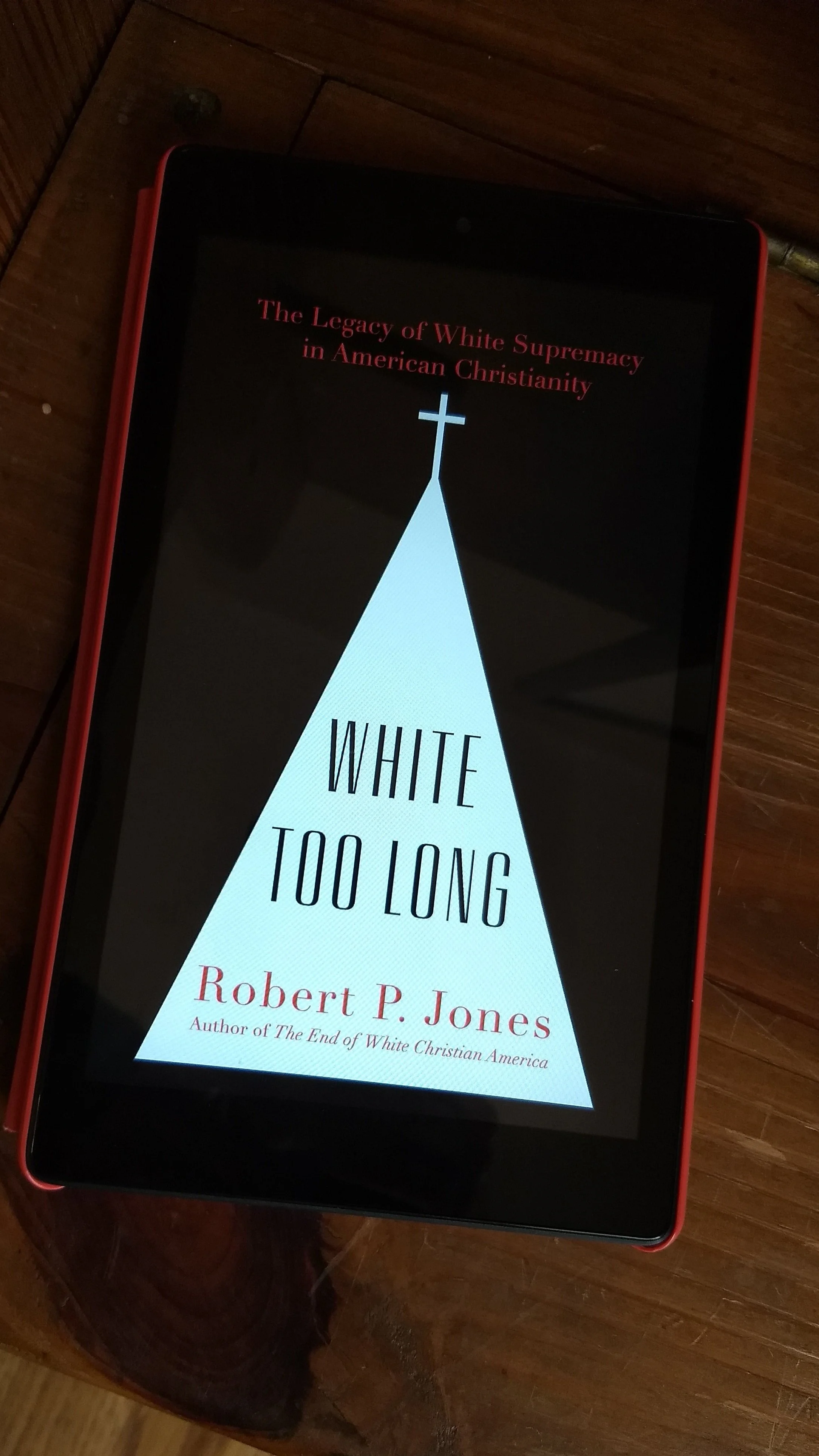
Book recommendation: White Too Long

I treasure my ecumenical work. I have learned so much from serving in Disciples of Christ, PCUSA, and United Methodist settings and from working with pastors and churches in at least twelve denominations. My primary identity, however, is as a Baptist. I grew up in Southern Baptist churches, at first because there was no Alliance of Baptists or Cooperative Baptist Fellowship. I was a senior in college before I learned that I had those options. (I wasn’t convinced, though, that I wanted to take them until I started attending an Alliance/CBF church full of the inclusive Baptists I aspired - and still aspire - to be.)

If you’ve grown up in the Baptist world or any other evangelical tradition, you know that the emphasis on a personal relationship with Jesus Christ is strong. That’s what preaching and spiritual formation are primarily geared toward, and the altar call is the culmination of any worship service. Now don’t get me wrong - loving Jesus and spending time with him is a crucial aspect of my faith. But it wasn’t until I attended Candler, a seminary in the United Methodist/mainline Protestant tradition, that I heard of social holiness. It turns out that Jesus isn’t just a good guy to hang out with and that salvation isn’t just about our baptism or private prayer practices. It’s also about living like Jesus and advocating for his values at the systemic as well as the interpersonal level.

In his book White Too Long: The Legacy of White Supremacy in American Christianity, Robert P. Jones makes the case that American evangelicals’ laser focus on personal salvation is not simply a matter or polity or theological difference from other Christian expressions. It in fact propped up slavery - the Southern Baptist Convention, for example, was formed out of a commitment to slaveholding - and still undergirds racism in insidious ways. Among other problems, this individual focus blurs vision of the larger cultural landscape and allows believers to shed responsibility for working for equity too easily. (Jones notes that mainline Protestants and Catholics are not immune to the mutual reinforcement of theology and racism either. In fact, Jones’ research shows that holding white supremacist attitudes and church attendance parallel each other across all varieties of white American Christendom.)

There’s a lot of theological reflection and repentance - meaning sustained action, not just a quick reach for forgiveness - required for the ways that American Christianity and white supremacy have become so intertwined. In particular, Jones’ book helped me understand why so many Christians leaders I know have been left scratching their heads about their inability to diversify their congregations. There are not simply differences in ritual or worship style or service length, as have long been held up as the reasons that Sunday morning at 11:00 remains the most segregated hour of the week. The very roots of our theology are preventing white people from fellowshipping with and learning alongside people of color. How do our core beliefs let our BIPOC siblings know they are right to keep us at arms’ length? How much work are we willing to put in to examine ourselves and make amends? It won’t be easy. After all, we’ve been white too long as the book title (taken from a James Baldwin quote) says. But if we love Jesus like we say we do, it’s time for us to roll up our sleeves.

The coming tidal wave of pastoral departures

There are many ways I could describe the past six months, but I’m going with “revealing.” The pandemic has clarified systemic issues related to a broken healthcare system, racial inequities, lack of leadership at almost every level (governmental and denominational), and inefficient infrastructure for responding to crises. Specifically, though, I am thinking about how all the shifts prompted by Covid-19 have uncovered how unsustainable ministry is for so many pastors in their current contexts.

Prior to the pandemic, a significant number of my clergy coachees and colleagues were working under unrealistic expectations, whether those came from their congregations or from their own internal “shoulds.” And then, mid-Lent, they had to change the ways they did nearly everything - and fast. They became not just preachers but tech experts with all that entails: recording, editing, sound mixing, lighting, inviting people to and teaching them how to participate in and managing online meetings, exploring the most accessible social media platforms, and monitoring cyber security. They spent many hours trying to get all of this right because worship and Bible study and fellowship are so critical, not knowing that they’d have to continue all that they started beyond a few weeks, often without much help from others. (Because, again, the shutdown was supposed to be temporary, so why ask for assistance from others dealing with their own altered realties?)

Now not only do many ministers’ jobs look very different than what they were before mid-March, but they may no longer align with these leaders’ senses of giftedness and call. They are doing work they did not sign up for, or at least work they didn’t particularly love has increased while the aspects that energized them have all but evaporated. And there is no end in sight to these changes, both because Covid-19 continues to spread and because pastors know that they’ll have to keep up at least some of their new tasks once churches re-gather to accommodate constituents who’ve found virtual connection works better for them.

In addition, ministers lost their best means of not just keeping tabs on how their church members were doing but also getting any kind of encouraging feedback, namely seeing faces in the pews during worship and interacting informally with folks on Sunday mornings. This loss made communication, pastoral care, and decision-making infinitely harder. Everything started to take more time, more intentionality, more energy. This, while many clergy have also been caring for and schooling children whose schools and daycares closed and whose other caregivers have had to isolate to protect their own health.

In return for all the extra effort, many pastors have received mostly anxiety and negativity in return. Part of this is because everyone is struggling, and church is an easy place for people to project discontent. (What’s your pastor going to do if you get mad? She can’t fire you, refuse to work with you, or give you a bad grade.) Part of this is the polarization in our culture, which has morphed public health measures like closing buildings and wearing masks into political landmines during a presidential election cycle. And part is simply that church members simply don’t know all that their leaders are doing since everyone is isolated in their homes.

The effects of all these difficulties are taking their toll. They have deepened pre-existing fault lines and created new ones such that clergy who already had some sense of discontent now have one foot out the door, and some who were very happy are seriously questioning whether their current context is still a good fit. The result, I predict, is going to be a tidal wave of pastoral departures once churches re-gather, and maybe sooner depending on how long the pandemic rages on. Clergy who have been hurt by accusing questions like, “What are you doing all day?” or “Why can’t we meet?” or “Why didn’t you do X (or call Y)?” “Are you really going to make me wear a mask?” are going to have trouble forgetting and will look for fresh starts elsewhere. Some lead clergy who have caught a lot of heat might want to step into positions, such as associate roles, where they aren’t the point person. Others are just going to feel chewed up and spat out and choose to leave the ministry altogether.

Church folks, this time is hard for everyone. It’s hard for you, certainly. And it’s hard for your pastor. If you want to keep your pastor after Covid-19 becomes more manageable, here are some suggestions to help ease your minister’s stress during the pandemic:

  • Check on your pastor. Many clergy don’t have anyone outside of their family to ask how they are and to listen to the answer.

  • If you have the bandwidth, ask how you can help. As mentioned above, ministers took an unsustainable amount of work on themselves early in the pandemic because it was easier in the short term, they didn’t want to bother others who were struggling, and they didn’t know they’d be doing all the extra tasks six months later.

  • Speak well about your pastor to others. If other church members talk disparagingly about what they think the minister is or isn’t doing, reply with your belief that she is working hard and, like all of us, doing the best she can.

  • If someone mentions a specific pastoral care need to you, urge that person to contact the pastor. She wants to know so that she can respond!

  • Engage bigger questions with fellow church members. What are we learning about our church or our community during this time? What do we need to keep or stop doing as a result? If you can think beyond the moment and help others do so, your pastor will be so grateful.

  • Send your minister an encouraging card, text, or email. Name specific things you see her doing that you appreciate. This noticing goes a long way in helping a pastor feel valued.

It’s normal for clergy to depart in the wake of an acute event like a disaster. It isn’t inevitable, though. People in the (virtual) pews can attempt to stem the tidal wave simply by being supportive and encouraging others to do so. Even if your pastor eventually leaves, she will treasure the affirmation, and your church will have established patterns for loving your next leader well.

Photo by Max McKinnon on Unsplash.

A prayer for Labor Day weekend

Creating God,

you wove a pattern of work and rest into the design of the universe:

making good things for six days and consecrating the seventh for sabbath,

giving our bodies a daily rhythm of productivity and sleep,

and even mirroring this starting and stopping in nature

by prompting plants to bloom and then lie dormant.

On this Labor Day weekend we celebrate good work, paid and unpaid:

shaping our days,

giving us purpose,

utilizing the range of skills you gifted humanity with,

making it possible for us to buy both essentials and extras

until we reach retirement

and live out our days on the saved-up fruits of our labors.

At least, that’s the idea.

But some people work multiple jobs and still cannot make ends meet.

Some people cannot find employment because they have criminal records.

Some people reside in areas where jobs are scarce.

Some people are discriminated against in the hiring process because of their race, ethnicity, gender, sexual orientation, disability, or religion.

And during this pandemic, work is all the more fraught.

Many jobs increase employees’ exposure to the virus.

Many employers have closed up shop.

Many childcare options for workers with young children have disappeared.

Rest at the end of each workday is hard to come by because of anxiety and limited leisure outlets.

Re-creating God, help us.

Give us work we can feel good about,

protect us from harm as we go about it,

provide for those who are unable to work or whose work does not pay fairly,

open the hearts and minds of those who have jobs to offer,

highlight what needs to shift in our economy so that all might know abundance,

and inspire and empower us to change systemic inequities.

Make it possible for us to look at our collective labors and say, “It is good”

before taking a holy nap.

These things we ask in the name of a Christ who both hit the road and hid out for breaks.

Amen.

a prayer for Labor Day.png
Book recommendation: Jesus and John Wayne

“The progress that women ministers have made in the Southern Baptist Convention since 1980 has been encouraging, but many problems persist which prevent women from becoming accepted by the conservative-controlled Convention as church leaders called by God. The rift between conservatives and moderates is the primary barrier, and this division is the result of political and theological differences so intertwined that they are often indistinguishable. Conservatives have been phenomenally successful in their attempts to control the SBC hierarchy. They have a well-defined ideology based upon biblical inerrancy and pro-traditional family values (conservatives are able to play very effectively upon Baptists’ fears that the family is in decline), and they have productively utilized the pulpit, increasing exposure and influence in the national political forum, and a well-organized network of conservative leaders to communicate their views and mobilize support.”

IMG_20200817_133609604.jpg

I wrote these words in 1999 as part of my undergraduate thesis, in which I examined the obstacles and possibilities for Baptist women in ministry before leaping headfirst into seminary the following fall. After reading the excellent book by Kristin Kobes Du Mez on white evangelicals and the culture war, here’s what I’d go back and tell myself as a college senior:

1) It’s going to get more fraught, not less, within all of white Christian evangelicalism. Buckle up, because the culture wars will greatly impact your life long after you shed the evangelical label.

2) You don’t yet have the whole picture. The culture wars are about so much more than politics and biblical interpretation. (Spoiler alert: it really has little to do with the Bible.)

Jesus and John Wayne filled in many of the gaps for me. In the past few years I have become particularly fascinated by the geopolitics of World War II and, even more so, the Cold War. Evangelical leaders utilized Americans’ fear of the Soviet Union coming out of WWII, the military ramp-up around multiple wars in the mid to late 20th and early 21st century, a growing and well-utilized communications network (including publishing houses, radio stations, and mailing lists), increasing influence over elections and policy resulting from that communications empire, complementarian ideology that established a rigid chain of command in the home and in society, and white people’s fear of cultural erasure to divide the citizenry and claim power. Anytime it seemed that the white evangelical influence was on its way out, even sometimes due to its own financial and sex scandals, power brokers stoked that sense of embattlement to get out the vote and encourage evangelicals to make their opinions felt in other ways.

If you want to know why childcare is so expensive while women still make less money than men, why certain segments of Christianity are pro-gun and pro-war (while also often being pro-life when it comes to abortion), how white supremacy has continually been nurtured, why poor whites often vote against their economic interests, and how politicians who thumb their noses at “family values” ride waves of white evangelical support into office, read this book. It might not make you feel hopeful, but it did help me feel like I had a better grasp of this bizarro world.

It's good to be here

On Sunday I celebrated an important anniversary. Last August 16 I was run over by an SUV while crossing a busy downtown street. It was not an experience I’d wish on anyone. When I see a character get hit by a car on tv, I still have a reaction that is all at once physical, psychological, and emotional. I scream, hold up my hands, and brace for impact. I expect that response will never fully go away.

I am incredibly grateful to have survived such a horrific event. I occasionally wondered in the early stages of the pandemic, though, “I stuck around for this?” It was always a fleeting thought, but it was also an honest one, acknowledging how much has changed since March and how a lot of that change sucks.

Not everything is terrible, though. My son and I were talking recently about what is different for him after these past five months at home. In that time he has learned to ride a scooter, play Minecraft, use Google Docs to write his short stories, and make stop motion videos. He has discovered new favorite book series. He has improved his drawing skills in ways he’s really proud of. There’s more, but you get the idea. This space has allowed him to experiment and explore, largely at his own initiative.

I started thinking along the same lines for myself. I realized that I’ve done some new things I’m happy with too - webinars, writing, small group coaching sessions around focused topics, cohorts - but I didn’t want to focus on the productivity pieces. It didn’t seem particularly helpful to tie my satisfaction to these kinds of measurable outcomes, because what if I’m less productive when school starts? How will I feel about myself then? Instead, I honed in on how I as a person have grown. (I share all of what follows with gratitude for my spouse, who is my sounding board, co-parent, and constant support. I try to be the same for him.)

I am more adaptable. I like to have and work a plan, and I usually like to work big chunks of that plan in silence. [Hello, raging introvert here.] Well, good luck with any of that sheltering at home for an unknown period of time, particularly with an extroverted seven-year-old. I was forced to be more nimble, and after a while it started to come a bit more naturally to me.

I am more resilient. There were points during the first couple of months when I was nearly incapacitated by stress. I was tired all the time but didn’t sleep well. Everything felt out of control. As I re-oriented to my purpose (see below), took a few minutes each day for more right-brained activity (paint by numbers!), and power-walked daily around my neighborhood, though, I found myself more grounded and ready to deal with what came.

I am more deeply-rooted in my call. As I listened to coachees and colleagues during the early weeks of the pandemic, I began to hear patterns and themes: how do I deal with this change or that? How do I tend to my well-being in the midst of it? Helping ministers and churches navigate transitions well is where my heart is. I recognized I had something to offer, whether it was coaching or information or connections to others going through similar circumstances. I needed and leaned into that re-affirmation of niche.

I am a better parent. Before March I was worried about how to get through the summer when our small town has few childcare options. [Insert maniacal laughter here.] I thought I had to compartmentalize work and family to do either well. As it turns out, I don’t. (A lot of this, for sure, has to do with my kid finding his own initiative during this time.) I take time to switch mentally between the two, then I can do science experiments and read to my son or help him find Lego pieces and generally be present with him while I do it. Not perfectly, for sure, but much better than before. And I get and give many more snuggles now, which I’ll take all day long.

Things remain hard, but they are definitely not all bad. I’m glad I stuck around for this.

Photo by John Baker on Unsplash.

Taking time to transition (re-mix)

I wrote the post below three years ago, with all the blushing innocence that 2017 afforded us. I think, though, that taking the time to shift our foci between tasks is more important now than ever. The pandemic has smushed our work and personal lives into one amorphous mess, compelling us to try to do all the things while feeling like we do none of them justice. But what if we took a deep breath in between answering an email and answering the ten-questions-in-one hurled at us by our child? What if we spent a few moments in centering prayer in between Zoom calls? What if we took a short dance break in between filming worship segments? What if we did a brief body scan at bedtime and stretched out areas of tension so that we could rest better? We still wouldn’t have all the time we needed to complete our to-do lists - that’s simply not possible right now for many of us - but we would be able to show up more grounded for others and be kinder to ourselves. You are worth that, and so are the people you care about at church and at home.

I love my lists and my Google calendar. They make my chaotic life feel manageable(ish). Still, there are times when the to-dos meld into  asinglerunontask and events overlap. That’s when my brain kicks into hyperdrive, my eyes dart around my desk, and my heart picks up the pace. I’m TCBing, with output of questionable quality. I’m everywhere at once, but nowhere fully present. Maybe you can relate.

I confess that I sometimes I sing “I’m Every Woman” to myself with whiff of pride. But it’s not always (often? ever?) good to be every woman at every moment. I don’t want to be mentally running through research while eating dinner with my family. I’m not my best self as a leader if I’m sketching my sermon outline during a committee meeting. It’s hard to give good pastoral care to someone who is grieving when I’m still coming down off a tense conversation with a colleague. Yes, there are times when I have to manage multiple responsibilities, but not as often as I try to.

Hence the need for transitions: into and out of my workday, from one task to another, between conversations that require emotional awareness and sharp mental focus. Anytime a shift in mindset is warranted, I’ve got to take a moment to close one internal file and open the next. This transition allows me to consider how I want to show up for the situation I’m about to enter and to re-center myself so that I can live toward those intentions.

There are any number of ways I make the shift – sometimes more successfully than at other times, I admit. Taking deep breaths to re-set my brain. Jotting down notes about what I’ve been doing so that I can fully set that work aside and come back to it later. Doing a couple of quick yoga poses or pilates exercises. Shutting my eyes for five minutes (making sure to set an alarm!). Queueing up the playlists I’ve created for settling down and amping up. Turning over loose threads to God and asking for awareness and guidance going into whatever is next on the agenda. Taking a lap around the building.

What are the ways you transition from one task or event to the next, or even into and out of your day? Where do you need to build in a couple of minutes on the front and/or back end of your to-dos so that you can fully be you – insightful, compassionate, prophetic, gifted you – as a pastor and a person?

Photo by Suad Kamardeen on Unsplash.

A prayer for the start to this (weird) new school year

My son last received formal instruction from his school on March 13, meaning first grade effectively ended for him on that day. Five months later, he is about to begin second grade. In that between time his school system, like every other one across the United States, has brainstormed, changed course, planned, and crossed its fingers for the academic year to come. In that time my spouse and I, like many parents across the United States, have wondered, fretted, been faced with impossible choices that we changed our minds about almost daily, and settled uneasily on the best path forward for our family. If you - or the people in your care - are in this situation, here’s a prayer that you’re welcome to use and share. Peace be with you.

God our help in ages past and hope for years to come,

we approach the beginning of this cycle of formal education with all the typical emotions:

excitement, uncertainty, disappointment at the end of summer, grief about the passage of time.

This year, though, that’s not all.

Over this summer the Covid-19 infection rate has trended up.

So schools and school systems have pivoted and planned to the best of their abilities for the education and safety of their students.

So parents have debated the educational options and second-guessed their choices for their children.

So faculty and staff have asked hard, important questions - many of which remain unanswered - about adequate access to cleaning supplies and protocols if someone gets sick.

Now here we are on the precipice, hoping for the best but terrified to send our loved ones into potential outbreak incubators.

It is too much.

It is too much to ask of our educational institutions that they meet so many community needs that kids’ attendance at them becomes essential for some families.

It is too much to ask of parents to give up income and calling to stay home with virtual learners to decrease exposure.

It is too much to ask of faculty and staff to overhaul their teaching approach or risk their lives (and potentially those of their loved ones) for not enough pay or respect.

And so we pray, fervently.

For good health, above all.

For peace with our hard-wrought decisions, whatever they are.

For compassion toward all, recognizing we’re all doing the best we can.

For enough for those scraping by with less income.

For flexibility and resilience, which we’ll all have opportunities to deepen.

For learning, whether or not it’s of the “academic” variety.

For connection across the cloud and across physical distancing restrictions.

For an increased awareness of the struggles of those around us and ways we can safely help one another.

For a long-term commitment to change systems that don’t serve us all equitably.

May we remember that you go with us wherever we go - or don’t go.

May we grow our dependence on you through this time.

And may we yet wrestle a blessing out of this terrible mess, leaving us changed for the better.

We pray these things in the name of the Christ who hurts with us

and by the power of the Spirit who gives us courage.

Amen.

Photo by Vera Davidova on Unsplash.

Your leadership is showing

During this strange season we have witnessed leadership that has helped us feel more ready to face challenges. I have been admiring this kind of leadership in and from you! (We have also felt rage and despair at leadership that passes the buck or exists only for the benefit of those in charge.) Here, in my observation, is what makes someone a true leader:

Great leaders listen. Leadership begins with tuning in - to the voices of others, to data, to the movements of the Spirit, to one’s own deep knowing and misgivings.

Great leaders ask. There are times for certainty, but they are much fewer than we tend to think. Curiosity will usually get us further.

Great leaders encourage. Some people think that threats and shame make those around us work harder. That’s a recipe for sabotage and high turnover, not to mention an approach antithetical to the gospel.

Great leaders equip others. No leader has all the insight and skills needed to promote progress or to clear hurdles. Plus, isn’t it simply fun to see the people around us understand and use their gifts?

Great leaders take appropriate responsibility. They accept credit for what went well while sharing praise with others who contributed. They refrain from shifting blame to others just to make themselves look better.

Great leaders communicate. They get the word out in as many ways as possible, as often as possible, often to the point of feeling like they are grossly overcommunicating. (Rarely, if ever, is overcommunication a thing.)

Great leaders adapt. In a time of accelerating change, leaders must be nimble. They know that pivots aren’t signs of failure but markers of forward thinking and responsiveness.

Great leaders strive to grow. Lifelong learning is the posture of a great leader.

Great leaders care. They care about both the people whose faces they see on a regular basis and those they don’t but whose lives are impacted by their actions.

Great leaders rest. They know the world will keep spinning if they take a nap, and that they will be better able to do all of the above if they tend to their physical, mental, emotional, and spiritual health.

Where do you see yourself reflected in these markers of a great leader?

Photo by KOBU Agency on Unsplash.

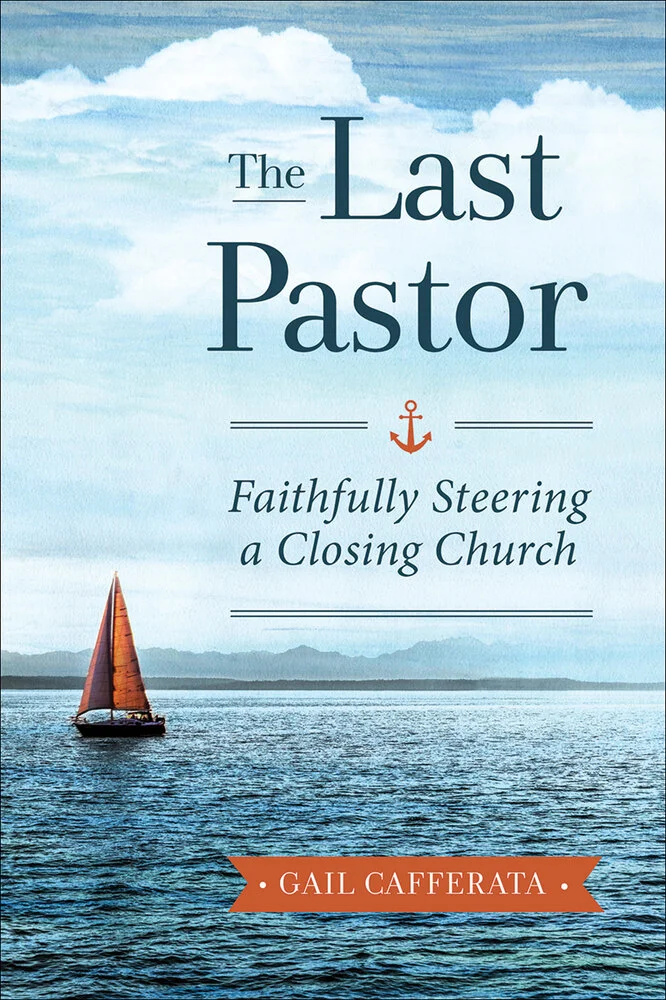
Book recommendation: The Last Pastor

A few weeks ago I shared my takeaways from Part-Time Is Plenty: Thriving Without Full-Time Clergy, which assures its readers that having a part-time pastoral leader can be a nudge toward greater vitality. I experienced a bit of whiplash when I followed up that read with The Last Pastor: Faithfully Steering a Closing Church. In it retired Episcopal priest Gail Cafferata shares her own experiences along with those of other mainline ministers upon realizing their congregations no longer had the resources to sustain themselves. Some of these clergy knew upon entering these contexts that their primary task was to bring the church to a good end. Most did not, making their journey toward closing more personally difficult.

This is a useful read for any pastor whose church is teetering on the edge of viability. But I think the audience that most needs to internalize the lessons in this book is judicatory leaders. The ministers Cafferata interviewed note time and again how the work of closing the church was made much easier or more difficult based on the posture of the judicatory and the information the judicatory was willing to share. On the negative side of the equation, some judicatory leaders take a “not on my watch” approach that denies churches’ situations until they are too dire or conflicted to end well. (This often results in installing first-call pastors whose enthusiasm for ministry quickly fades with the hard road toward closing and women who find themselves toeing the edge of the glass cliff.) Others pull the rug out, closing churches with little to no input from the pastor or parishioners. A few mock or blame the clergy who are faithfully attempting to lead their congregations through a grief process. All of this abandonment can prompt ministers to question their effectiveness and possibly their call to vocational ministry.

The ministers referenced in the book make it clear that pastors need honesty, partnership, spiritual support from the people charged with the care of districts or regions of churches and their leaders. Clergy also benefit from focused help and positive references from their judicatory leader as they search for their next call, because pastor search teams are sometimes unable to look beyond the fact that the candidate’s last church closed. When congregations and their clergy feel respected and seen, closing is much more likely to be more meaningful for all involved and result in those church members seeking out new faith homes.

Ministers in smaller churches, read this book. More importantly, get it in the hands of those with influence in your judicatory.

Coaching can help you navigate all that the pandemic has thrown at you

Sure, I’m biased. But I believe coaching is more valuable now than ever. Pastors are facing so many new situations for which there is no expert advice. We are all feeling our way along, and coaching can help you think through your gifts, needs, resources, and context so that you create a path that fits you and the people in your care. For example:

Is your church continuing to meet online for the foreseeable future, yet you’re exhausted and not sure how to make this means of ministry sustainable? Coaching can help you think through goals for this time, cull the to-do list down to the tasks that make accomplishing those aims possible, and a make plan for tackling the tasks.

Are you undecided about how to approach the traditional start of the program year in this very untraditional season of social distancing? Coaching can help you tap into your creativity and place this program year in a larger spiritual formation trajectory, making it easier to focus on and get excited about what is most important.

Are you looking for a new call during this pandemic, wondering whether churches are searching for pastors and how a candidate can tell her story well in these changed circumstances? Coaching can help you identify the added opportunities and challenges of being in search & call right now, enabling you to capitalize on the former and manage the latter.

Are you scratching your head (or, let’s be real, panicking) about how to balance supervising your child(ren)’s virtual or blended school while staying faithful to your ministerial role? Coaching can help you name how you want to show up for your family and your church, then make an actionable plan for how to operate that way.

Do you want to explore a new self care strategy since many of your usual outlets are unavailable to you? Coaching can draw out the characteristics that make self care effective for you and broaden your thinking about tactics that meet those criteria.

Has your pastoral position been downsized from full- to part-time because the offering has tailed off during the pandemic? Coaching can help you make the transition to being truly part-time - not just full-time with part-time pay - and to discover additional income streams if needed.

Is the polarization over mask-wearing morphing into political debate in your congregation - with a U.S. presidential election looming - and leaving you caught in the middle? Coaching can help you discern how to self-differentiate so that you can tend well to relationships rather than get hooked by arguments.

Not only can coaching assist in these areas and more, but it is fully customizable to your goals and your schedule. If you had professional development funds earmarked for conferences you can no longer attend, there is no better use of that money than to contract with a coach who can help you navigate all that 2020 is throwing at us. I welcome you to schedule a free discovery call here to learn more about how I approach coaching and to ask any questions you might have.

Photo by Edwin Hooper on Unsplash.

Dear pastors

Dear pastors,

We have now hit the halfway mark in this year like no other. Maybe you came into 2020 excited for what was to come. Maybe you were limping along in ministry, battered by conflict or worry about church finances. Whatever your outlook was in January, no one has escaped untouched by the global crises we’re experiencing.

In the past three months you have remained faithful to the gospel and your call, learning how to produce or livestream worship, preach to webcams and empty sanctuaries, reach new constituencies via online platforms, offer pastoral care and spiritual formation from a distance, and manage virtual meetings. You have lost sleep over when and how to re-gather physically as church. You have responded to the disparate calls to re-open immediately and and to keep the doors closed until the rate of infection trends downward, the divide between these groups matching up awfully closely with the boundaries of political camps in our already-charged civic life (in an election year, no less). You have absorbed “feedback” from well-meaning church members who don’t fully know how to operate their own devices or think your home worship space is too cluttered or don’t like how your complexion or clothing show up on camera or don’t think you’re working enough, God forbid. You have wondered how to be church to those who don’t have smartphones or computers. Your head has nearly exploded from all the Zoom gatherings you’ve attended.

You have given up visions for a blow-out Easter Sunday service. You’ve been unable to celebrate fully your beloved graduates. Your summer looks nothing like you expected, whether it’s usually full of camps and mission trips and VBS or characterized by a much-needed slower pace. You’ve seen sabbaticals slip through your fingers. You’ve canceled plans, one detail at a time, for that conference or vacation that you were eagerly anticipating. Some of you have even changed calls in this midst of this mess, unable to get and give hugs to those who’ve ministered alongside you and forced to meet and start to get to know a new congregation through a screen.

You’ve done all this while either living alone and missing real-life human connection or while never getting a blessed moment to yourself, surrounded as you are by a roommate, partner, and/or children working and schooling from home. You’ve done all this while rationing toilet paper and cooking more than you ever have in your life. While, of necessity, discovering or inventing new outlets for self-care. While your primary systems of moral and professional support - other clergy - have been as distracted and weighed down as you are.

You initially thought this would all be inconvenient for a few weeks, then you could get back to normal. But then it became clear that the virus was accelerating, and you had to shift from a sprint to a marathon mindset. And you did, tough as it was. You pivoted again when murderous violence was perpetrated and videoed against several BIPOC* in rapid succession. You saw the moment we were in, the chance to make headway on current iterations of centuries of racism, the opportunity to speak into white silence and have more and bigger conversations about structural inequities. If you are a BIPOC, you heard people debate (again) your experiences and raised your much-needed voice. If you are white, you started or continued work on your own complicity in racial injustice. This is good and needed work - and it does not lessen the stresses and necessities related to pastoral leadership in the time of Covid-19.

Do you recognize how well you have led during this time? I am in awe of you.

Still, you are understandably weary. It is ok - holy, even - to rest.

You are wondering if you are enough. Yes. God equips and empowers us each to maneuver our part of Christ’s body.

You might even be questioning your call to vocational ministry. That is between you and God, but always remember that you - that we all - are called to and gifted for ministry in some form.

Thank you for who you are as a person and pastor. Thank you for what you do. God delights in your faithfulness, your innovation, your tenacity, even as God invites you to tag out for self-care and sabbath.

Blessings be upon you.

Your cheerleader, conversation partner, and admirer,

Laura Stephens-Reed

*The acronym BIPOC might be new to you like it is to me. It stands for Black, Indigenous, and People of Color.

Photo by Kate Macate on Unsplash.

Pro bono coaching for clergy whose positions have been scaled back due to Covid-19

Covid-19 has wreaked havoc on almost every area of our individual and corporate lives. Our resilience, resourcefulness, and relationships have been stretched to their limits as we’ve managed ongoing drastic changes in our professional and personal lives over the past 3+ months. As we’ve been doing all the things and caring for all the people, ministers serving congregations with tenuous finances have wondered how much longer their church budget would support the amount of work they’ve been putting in. (Although, let’s be honest, many ministers were and are already underpaid for the fullness of their efforts.) At this point in an ongoing pandemic, some congregations have had to make tough choices, including cutting back the hours and pay of their minister or eliminating a ministry position entirely.

Are you a clergyperson who finds yourself in this situation? Maybe the amount of work to be done has not changed - nor has your care for your parishioners - but the paid scope of your position has. Or you suddenly find yourself searching for a new call in the midst of Covid-19. These are not easy transitions to manage without help.

I’d like to offer encouragement and partnership to you. During each week in July I am making two one-hour coaching sessions available at no charge to clergy whose positions have been cut or eliminated entirely. You can sign up for one of these sessions here. Together we’ll strategize next steps for making your responsibilities fit your salary or starting the search for a new ministry position. Your leadership is too valuable to the church and world for you to be doing work you’re not paid for or spinning your wheels!

Please share this information with colleagues who could benefit.

Question burst

We live in a time with many questions and few answers. Wouldn’t it be great to get just a few?

In a webinar I recently attended, presenter Hal Gregersen suggested the way to obtain those answers was to - wait for it - ask more questions. In an exercise he calls “question burst,” he sets a timer for 2 to 5 minutes and invites individuals and teams to name as many queries about their current challenge as possible. Don’t filter, just jot down a question and move on to the next. When time is up, those participating are encouraged to look at their lists of questions. Often a deeper concern to be addressed or a first step forward emerges.

This exercise makes a lot of sense to me. Too often we stop at obvious or surface questions, moving quickly to trying to solve the problem. But because the questions don’t get at the root, the responses don’t actually fix anything. If we just keep asking, though, we’ll start to get somewhere.

Next time you’re facing a challenge or planning a new initiative, take a few minutes to engage in the question burst exercise. You might be surprised by how much more and meaningful progress you’ll make.

Stay curious, my friends.

Photo by Jon Tyson on Unsplash.

Ongoing referral special and referral sheet

As I imagine is true for most coaches, the bulk of my new clients come from current coachees’ outreach to colleagues who might benefit or casual word-of-mouth recommendations. I am very grateful for these referrals! I want to make it easier for people to tell others about the value of coaching and reward their efforts in doing so.

To that end, I have made this referral sheet available in PDF format, and you can click on the image below to save it as a PNG file. It names the people and groups I work with, details my vision for and approach to coaching, differentiates coaching from counseling and spiritual direction (two disciplines that are distinct from but dovetail nicely with coaching), and provides information on how to get started. Page two, should you choose to keep reading, provides some testimonials.

When potential clients sign up for a free discovery call, I ask where they found out about my coaching services. If they name you specifically, you get two free one-hour coaching sessions. If you’re a current coachee, those two sessions get added to the end of your package. If we’re not coaching together right now - and even if we never have! - you get two sessions to use at your convenience. That’s a $200-300 value, because referrals are that important.

Thank you to all who have recommended my coaching in the past, and thanks in advance to those who will. It is a privilege to serve the church and its leaders in this way.

Healing from our collective traumas

Recently a few different people recommended to me - for different reasons, interestingly - The Body Keeps the Score: Brain, Mind, and Body in the Healing of Trauma. In it Dr. Bessel van der Kolk, one of the world’s leading experts on trauma, explains what happens to us when we are traumatized. We are unable to give complete voice to the experience and integrate it into our self-understanding. It keeps us trapped in vigilance, believing that danger lurks just on the edge of our periphery and prompting out-sized responses to triggers. Over time the trauma rewires our brains and sinks deeply into our bodies, manifesting in a number of conditions that are often diagnosed and treated as separate mental or physical health issues. On a social level, it prevents us from trusting others and deepening relationships. Despite all of this resulting unpleasantness, someone trapped in trauma continually revisits that time when everything changed. It becomes borderline impossible to live in the present, much less envision a different future than the current trajectory.

I am not a doctor or a mental health professional. I also do not want to minimize in any way the experiences of abuse survivors, veterans, and others who live with post-traumatic stress. As someone who works with ministers and congregations, though, I kept thinking this sounds so much like some of our churches as I was reading. We don’t know how to name what our issues are and work through them to integrate them into a coherent narrative. The problems we do see are more symptomatic than root. Conflict simmers just beneath the surface until an incident - often a seemingly benign one - ignites it. Trust is hard to come by. We live in the glory days of how church used to be. We are unable to imagine a different future.

In some cases congregations might be recovering from trauma, such as a serious breach of ethics by the pastor or the sudden death of a key leader or a natural disaster such as a fire or flood that significantly damages the church. In other cases shame might be what we’re seeing the effects of: we once had an ASA of 1,000 and now it’s 100. We haven’t had a new member in years. Church members have left over controversies. We don’t feel relevant.

Whether congregations are experiencing trauma or shame, I believe Dr. van der Kolk offers helpful ways forward:

Address the issue from a place of safety (as much as safety can be guaranteed). People need to know that they are not just seen and heard but also valued, no matter what their experiences. A leader’s first task, then, is to build this kind of culture. This is long, ongoing, and necessary work.

Help people put words to their experiences. A problem that can’t be named can’t be dealt with, but most people can’t be invited into this acknowledgment until they feel safer.

Encourage people to feel what they feel and to be in their bodies. This is not a license to harm others emotionally or physically. It is a mining for the data those feelings and sensations offer.

Together craft a narrative that distinguishes between past, present, and future. There is always more than one true narrative. Which one is most helpful? Which one allows us to move forward with hope and in relationship? In choosing this narrative, individuals and congregations reclaim a sense of agency that they had lost, making it possible to get unstuck.

All of this is easier said than done, of course. But these bigger picture tasks mirror scripture: there is a life-altering chasm between us and God, between us and others. The Bible is about finding away to bridge those divides by examining what isolates us, including what causes alienation within our own selves, so that we can move forward in coherence and connection.

Photo by Kelly Sikkema on Unsplash.